
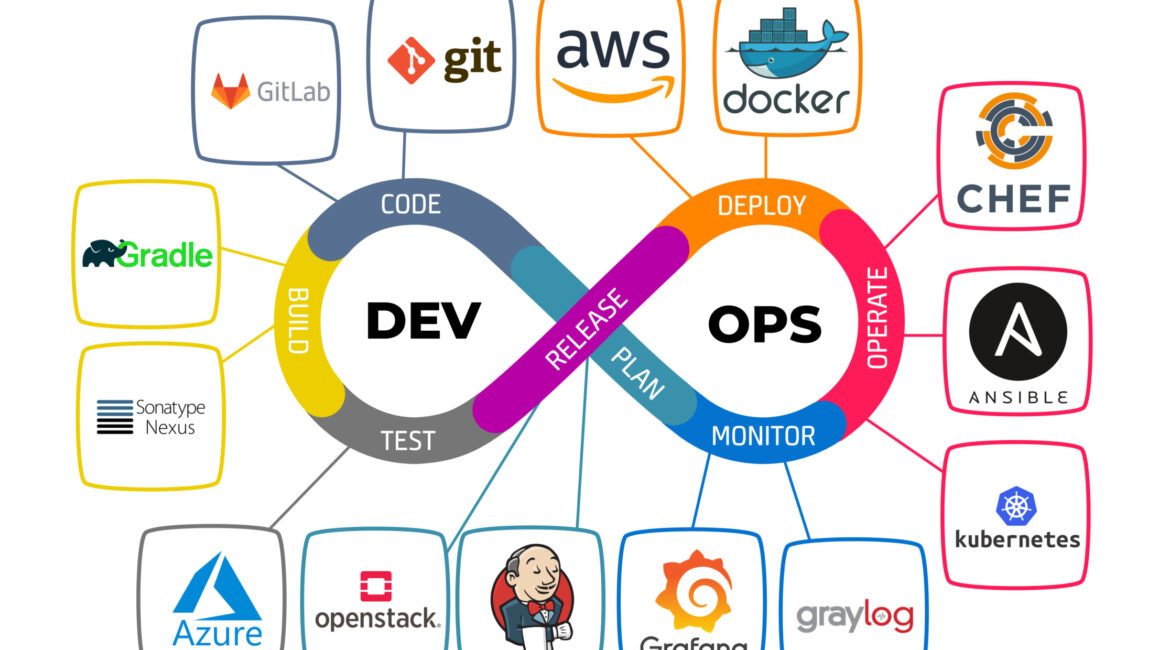
DevOps isn’t just a methodology anymore — it’s a strategic driver for innovation, efficiency, and business resilience. In 2025, DevOps continues to evolve rapidly, fueled by AI, cloud‑native technologies, and next‑level automation.
Here’s what’s shaping DevOps this year, and how your organization can stay ahead:
🤖 1. AI-Powered Automation & Predictive Operations
In 2025, AI and Machine Learning have moved from concept to core operational practice within DevOps DevOps -+3DevOps.com+3DevOps -+3.
- Predictive Analytics for Incident Management: AI tools analyze historical incidents to anticipate failures and suggest solutions before issues escalate.
- Self‑Healing Systems: Intelligent agents detect anomalies and automatically recover services — minimizing downtime.
- Automated CI/CD Optimization: AI enhances deployment pipelines, performs automated code reviews, and reduces human error.
Business Impact: Faster incident resolution. More reliable releases. Less manual toil.
🔐 2. DevSecOps — Security as Code & Early Integration
Security has become nondisputable in DevOps. This year, DevSecOps isn’t optional — it’s foundational .
- Shift‑Left Security: Implement security checks earlier—from coding to pre‑commit hooks.
- Security-As-Code: Store policies and secrets in version control via IaC tools like HashiCorp Vault or Snyk.
- Automated Security Scans: Continuous vulnerability scanning is embedded into CI/CD pipelines to catch issues before production.
Business Impact: Continuous compliance, fewer breaches, and smoother audits.
⚙️ 3. GitOps & Infrastructure as Code (IaC)
GitOps is redefining CI/CD by treating Git as the single source of truth for infrastructure and deployments.
- Declarative Configuration: Tools like ArgoCD and Flux enforce declared state automatically.
- Infrastructure Versioning: Infrastructure changes are auditable—and rollbacks are built-in.
- Collaborative Workflows: Developers and Ops work from the same Git workflow, reducing drift and improving transparency.
Business Impact: Reliable deployments, full traceability, and enhanced team collaboration.
☁️ 4. Cloud-Native, Serverless & Hybrid Architectures
Running modern applications in 2025 means leveraging serverless and hybrid cloud environments for scalability and resilience.
- Serverless CI/CD: CI/CD pipelines now run on platforms like AWS Lambda or Azure Functions, reducing infrastructure overhead.
- Edge & Hybrid Patterns: Kubernetes, microservices, and edge compute reduce latency while improving reliability.
- Service Meshes: Tools like Istio and Linkerd enhance communication between microservices.
Business Impact: More resilient architecture, efficient scaling, and reduced ops burden.
📊 5. Observability, Platform Engineering & FinOps
As systems grow more complex, companies are prioritizing full-stack observability and optimization.
- Unified Observability Platforms: Tools like Grafana, OpenTelemetry, and Prometheus allow real-time analytics across logs, metrics, and traces.
- Platform Engineering: Teams build internal self-service platforms to streamline developer workflows and increase consistency.
- FinOps: Organizations actively track cloud costs using tools like Kubecost, aligning DevOps practices with financial efficiency.
Business Impact: Better insight, unified developer experience, and optimized cloud spend.
📌 Bonus: Merging DevOps & MLOps for Intelligent Delivery
For organizations driving machine learning models into production, combining DevOps and MLOps is critical
- Shared workflows for code, data, and deployment reduce inefficiencies.
- Versioned models, traceable pipelines, and automated validation improve reliability.
- Integrated DevSecOps ensures ML pipelines stay compliant and secure.
Business Impact: Faster, safer ML deployments. Better auditability. Reduced model drift.
